New clinical care recommendations available for cardiologists treating adults with myotonic dystrophy
(le français suit)
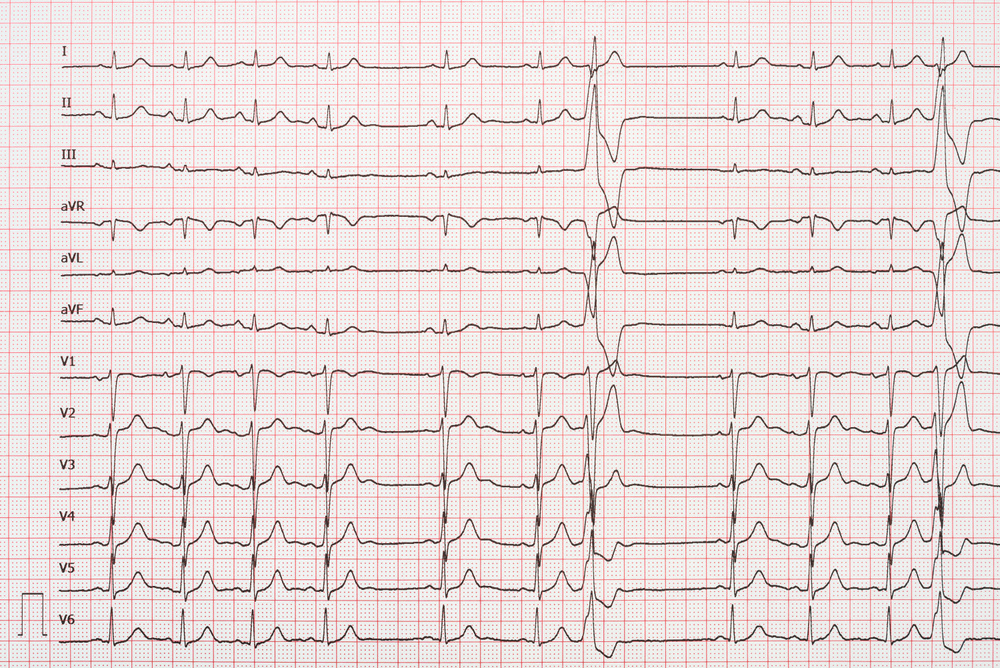
 Cardiac complications may affect more than 50% of patients with myotonic dystrophy and occur in both myotonic dystrophy type 1 (DM1) and type 2 (DM2). Cardiac conduction system disturbances can have sudden and catastrophic presentations, but are often preventable through proper management. Cardiac surveillance of patients with myotonic dystrophy can therefore be lifesaving, and it is recommended that patients undergo regular screening by a cardiologist familiar with neuromuscular disease and specifically with myotonic dystrophy, if available.
New recommendations aimed at cardiologists treating adults with myotonic dystrophy have just been published in the Journal of the American Heart Association. These recommendations represent expert consensus opinion from those with experience in the management of myotonic dystrophy, supported by literature‐based evidence where available. They have been compiled with the support of the Myotonic Dystrophy Foundation.
The cardiac management of myotonic dystrophy should include annual surveillance for arrhythmias and left ventricular dysfunction. The full clinical care recommendations include a detailed summary of the types of cardiac dysfunction seen in myotonic dystrophy and 15 summary recommendations covering regular monitoring of asymptomatic patients and further investigations and treatments once a patient experiences symptoms. The article is open-access and can be downloaded from the journal website here.
As part of its work plan, NMD4C aims to ensure the latest clinical care recommendations like these are made available to all Canadian healthcare professionals seeing neuromuscular patients and implemented in all clinics. We will review the guidelines to add Canadian context and specifics where necessary and will work with the professional and patient communities to ensure awareness and implementation.
Elizabeth M. McNally , Douglas L. Mann, Yigal Pinto, Deepak Bhakta, Gordon Tomaselli, Saman Nazarian, William J. Groh, Takuhisa Tamura, Denis Duboc, Hideki Itoh, Leah Hellerstein, and Pradeep P. A. Mammen
Clinical Care Recommendations for Cardiologists Treating Adults With Myotonic Dystrophy
Journal of the American Heart Association
Volume 9, Issue 4, 18 February 2020
https://doi.org/10.1161/JAHA.119.014006
De nouvelles recommandations de soins cliniques sont disponibles pour les cardiologues traitant les adultes atteints de dystrophie myotonique
Les complications cardiaques peuvent toucher plus de 50% des patients atteints de dystrophie myotonique et surviennent à la fois dans la dystrophie myotonique de type 1 (DM1) et de type 2 (DM2). Les perturbations du système de conduction cardiaque peuvent avoir des manifestations soudaines et catastrophiques, mais sont souvent évitables par une prise en charge adéquate. La surveillance cardiaque des patients atteints de dystrophie myotonique peut donc leur sauver la vie, et il est recommandé que les patients soient régulièrement examinés par un cardiologue connaissant bien les maladies neuromusculaires et plus particulièrement la dystrophie myotonique, si possible.
De nouvelles recommandations destinées aux cardiologues et s’adressant aux adultes atteints de dystrophie myotonique viennent d’être publiées dans le Journal of the American Heart Association. Ces recommandations ont été établies par un consensus d’experts ayant une expérience dans la prise en charge de la dystrophie myotonique et soutenues par des évidences scientifiques lorsque disponibles. Elles ont été développées avec le soutien de la Myotonic Dystrophy Foundation.
La prise en charge cardio-respiratoire chez les personnes atteintes de dystrophie myotonique devrait inclure une surveillance annuelle des arythmies et des atteintes du ventricule gauche. Les recommandations complètes comprennent un résumé détaillé des types de dysfonctionnement cardiaque observé dans la dystrophie myotonique et 15 recommandations sommaires couvrant la surveillance régulière des patients asymptomatiques ainsi que des examens et des traitements supplémentaires lorsqu’un patient présente des symptômes. L’article est en libre accès et peut être téléchargé sur le site web de la revue ici.
Dans le cadre de son mandat, NMD4C vise à promouvoir les dernières recommandations de soins cliniques comme celles-ci en les mettant à la disposition de tous les professionnels de santé qui traitent des patients atteints de maladies neuromusculaires et favoriser leur implantation dans toutes les cliniques neuromusculaires. Nous examinerons ces lignes directrices pour y ajouter le contexte de pratique clinique canadien si nécessaire et nous travaillerons avec les professionnels et les patients pour optimiser leur diffusion et leur mise en œuvre.
Read next...
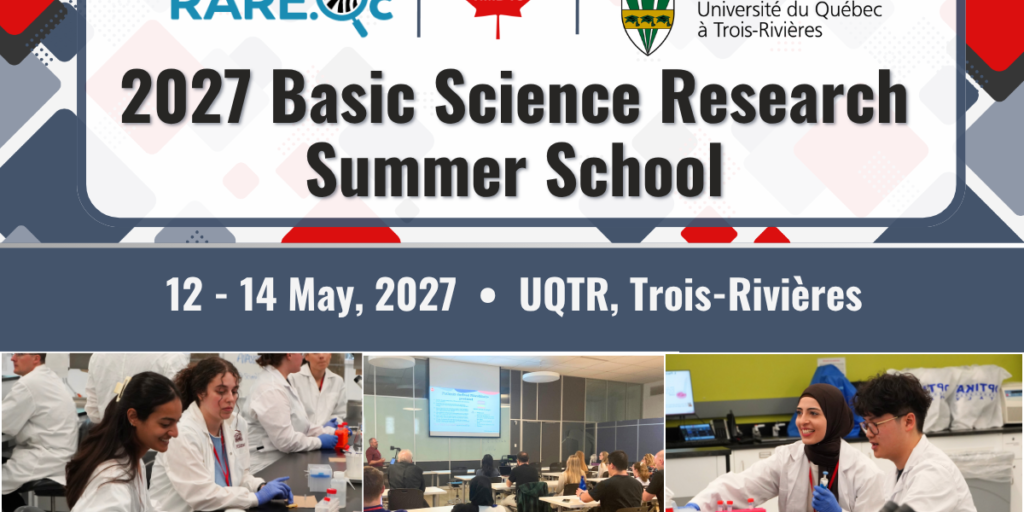
2027 NMD4C–RARE.Qc Basic Science Research Summer School Applications Are Now Open!
Deadline: December 1, 2026
2027 NMD4C–RARE.Qc Basic Science Research Summer School Applications Are Now Open!
The summer school offers neuromuscular and rare disease research trainees the opportunity to participate in an intensive three-day training program focused on cutting-edge experimental and translational research techniques.