NMD4C investigator Dr. Bernard Brais to be awarded The Norman Saunders Jacob’s Ladder International Research Prize
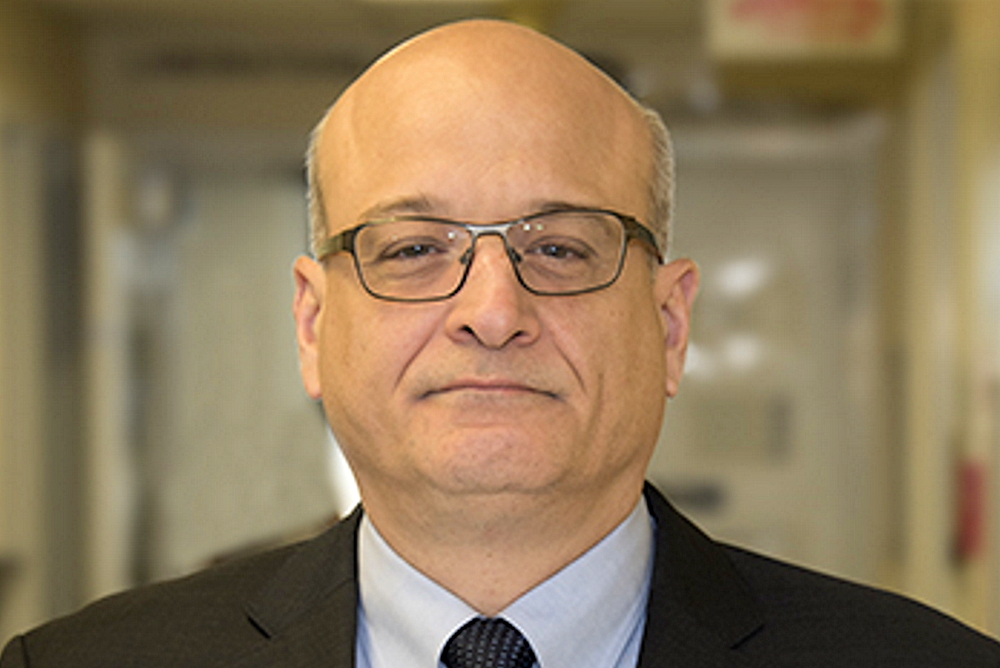
We are very proud of our investigator Dr. Bernard Brais for receiving the 2020 Norman Saunders Jacob’s Ladder International Research Prize!
Dr. Brais will be giving a talk at his award presentation on October 7 at 9am ET entitled “Ataxias with regional founder effects in Québec: Lessons on diversity.”
Register for the talk HERE.
Bernard Brais, MDCM, MPhil, PhD, FRCP(C) is Full Professor of Neurology and Human Genetics at McGill University in Montreal. He is a trained neuromuscular neurologist, PhD in laboratory human genetics and historian of medicine. He is co-director of the Montreal Neurological Institute’s Rare Neurological Diseases Group since 2011. He is co-director of McGill’s Neuromuscular and Neurogenetics Fellowships. His specialized practice is centered on the diagnosis and rehabilitation of rare often undiagnosed neurogenetic diseases, in particular: myopathies, ataxias, sensory neuropathies and leukoencephalopathies. Dr. Brais’ laboratory for the past 20 years has largely focussed on identifying new genes and mutations that cause hereditary diseases that are more prevalent in the French Canadian population of Quebec due to founder effects. He played a key role in the first identification of the genes responsible for: Oculopharyngeal Muscular Dystrophy (PABPN1, 1998), Hereditary sensory and autonomic neuropathy type II (HSN2/WINK1, 2004), Limb Girdle Muscular dystrophy LGMD2L-anoctamin 5 (ANO5, 2010), Posterior column ataxia and retinitis pigmentosa (FLVCR1, 2010), 0PolR3-related leukodystrophy (POLR3A and POLR3B, 2011), and congenital myopathy with fibre type disproportion (ZAK, 2017). Since 2007, he has been an international leader on collaborative research on Autosomal Recessive Spastic Ataxia of Charlevoix-Saguenay (ARSACS).
Read next...
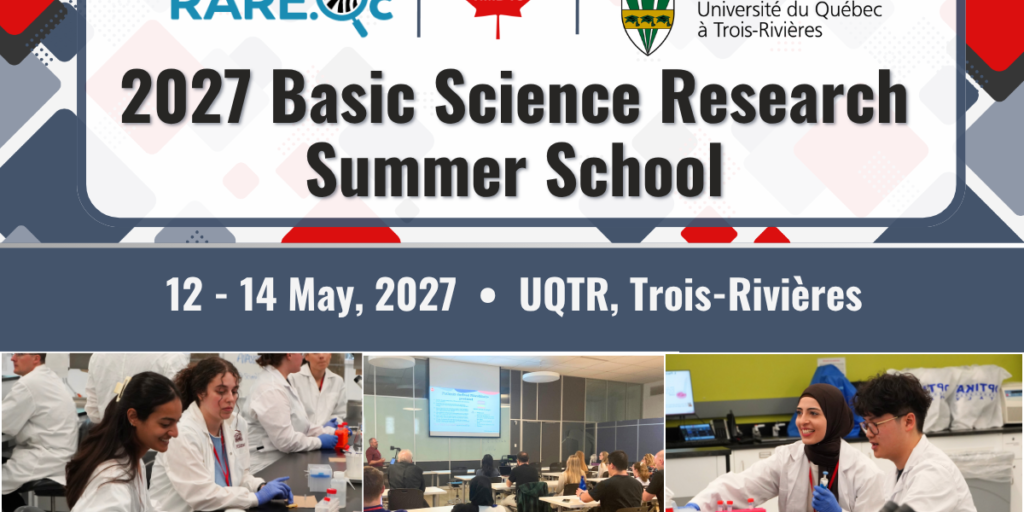
2027 NMD4C–RARE.Qc Basic Science Research Summer School Applications Are Now Open!
Deadline: December 1, 2026
2027 NMD4C–RARE.Qc Basic Science Research Summer School Applications Are Now Open!
The summer school offers neuromuscular and rare disease research trainees the opportunity to participate in an intensive three-day training program focused on cutting-edge experimental and translational research techniques.