Latest edition of the Journal of Neuromuscular Diseases now online – Sep 2020
Published: 21 September 2020
A new issue of the Journal of Neuromuscular Diseases has recently been released. Read it below:
Journal of Neuromuscular Diseases: Volume 7, issue 4
*NMD4C lead investigator Hanns Lochmüller is joint editor-in-chief of the Journal of Neuromuscular Diseases, together with Carsten Bönnemann of the NIH National Institute of Neurological Disorders and Stroke.
Articles in this issue:
- Towards central nervous system involvement in adults with hereditary myopathies
- Induction of skeletal muscle progenitors and stem cells from human induced pluripotent stem cells
- Lower extremity muscle involvement in the intermediate and Bethlem myopathy forms of COL6-related dystrophy and Duchenne muscular dystrophy: A cross-sectional study
- Ganglionopathies associated with MERRF syndrome: An original report
- Respiratory dysfunction in Becker muscular dystrophy patients: A case series and autopsy report
- Decision-making and selection bias in four observational studies on Duchenne and Becker muscular dystrophy
- Phenotypic spectrum of myopathies with recessive anoctamin-5 mutations
- Natural history of type 1 spinal muscular atrophy in a series of Argentinian children
- Neuroanatomical models of muscle strength and relationship to ambulatory function in spinal muscular atrophy
- Facilitators and barriers to wearing hand orthoses by adults with Duchenne muscular dystrophy: A mixed methods study design
- Identification and characterization of splicing defects by single-molecule real-time sequencing technology (PacBio)
- Swallowing, chewing, and speaking: Frequently impaired in oculopharyngeal muscular dystrophy
- Correlation between quantitative MRI and muscle histopathology in muscle biopsies from healthy controls and patients with IBM, FSHD, and OPMD
- A new point mutation in the PMP22 gene in a family suffering from atypical HNPP
- Severe inflammatory myopathy in a pulmonary carcinoma patient treated with Pembrolizumab: An alert for myologists
- Familial oculo-leptomeningeal transthyretin amyloidosis caused by Leu55Arg mutation
- Taking a Strohl through history: Putting Strohl back in Guillain-Barré-Strohl syndrome
- Measuring outcomes in adults with spinal muscular atrophy: Challenges and future directions – Meeting report
Read next...
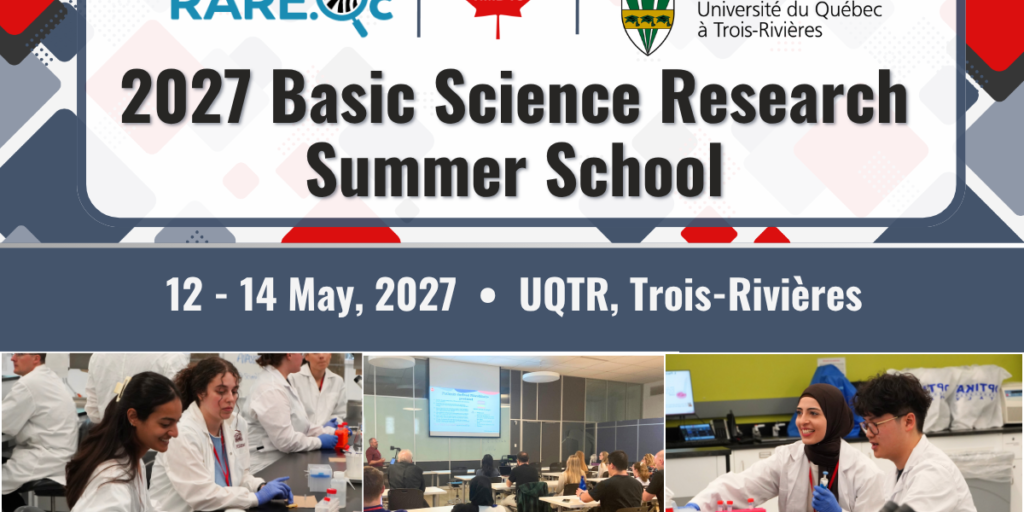
2027 NMD4C–RARE.Qc Basic Science Research Summer School Applications Are Now Open!
Deadline: December 1, 2026
2027 NMD4C–RARE.Qc Basic Science Research Summer School Applications Are Now Open!
The summer school offers neuromuscular and rare disease research trainees the opportunity to participate in an intensive three-day training program focused on cutting-edge experimental and translational research techniques.