BSTC: Lab of the Month – Dr. Jean-Philippe Leduc-Gaudet’s Muscle Physiology Lab at UQTR
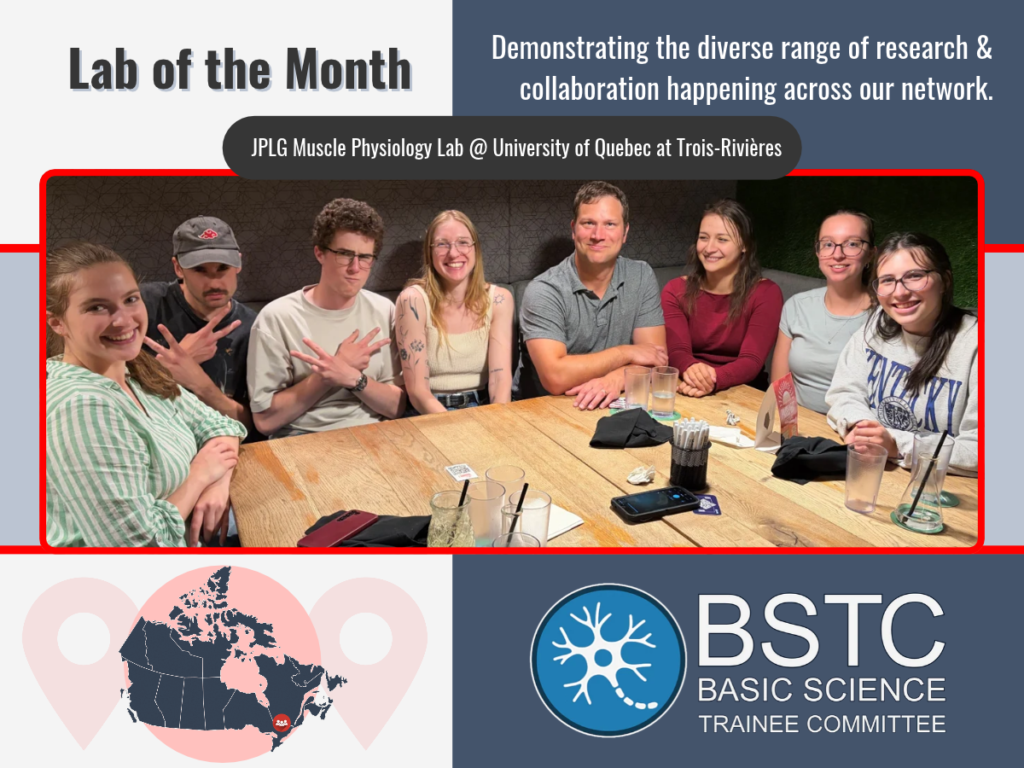
Our new Lab of the Month series highlights members of the NMD4C community and the diverse research, expertise and collaborations taking place across our network. Each month, we’ll introduce a different lab, meet the people behind the research and learn more about the work they are advancing.
Kicking off the series, we’re featuring the lab of Dr. Jean-Philippe Leduc-Gaudet at the Université du Québec à Trois-Rivières (UQTR).
Meet the PI

Jean-Philippe Leduc-Gaudet, PhD
Professor, Département de biologie médicale
Université du Québec à Trois-Rivières
Trois-Rivières, QC
Primary Research
Our research focuses on the molecular mechanisms that regulate skeletal muscle health and contribute to muscle weakness and wasting in various pathological conditions, including neuromuscular diseases. We are particularly interested in mitochondrial function, autophagy, inflammation and organelle quality control.
Using mouse models and human muscle samples, our laboratory investigates how these processes are altered in conditions such as myotonic dystrophy and Duchenne muscular dystrophy, with the goal of identifying new therapeutic targets.
Meet the Lab Members
Great science is a team effort, and collaboration allows us to ask bigger questions, combine complementary expertise, and ultimately push science forward
- Clémence Léger, PhD | Postdoctoral Fellow
Clémence’s research focuses on muscle-brain crosstalk and the molecular mechanisms underlying this bidirectional communication in mouse models of Duchenne muscular dystrophy. She is also investigating how disruptions in organelle quality control contribute to impaired muscle regeneration.
- Wanda Dupebe | PhD Student in Medical Biology
Passionate about bioinformatics, Wanda is developing her expertise in omics approaches, including transcriptomics, single-nucleus RNA sequencing and proteomics. Her research uses these approaches to investigate the molecular mechanisms underlying myotonic dystrophy type 1.
- Anthony Capobianco | MSc Student in Medical Biology
Anthony’s research investigates the therapeutic potential of rapamycin in Duchenne muscular dystrophy, with a particular focus on muscle function, autophagy, mTORC1 signalling and inflammation.
- Pascale Delisle | MSc Student in Medical Biology
Pascale’s research examines the progression of Duchenne muscular dystrophy across different stages of the disease, with a focus on changes in skeletal muscle function, pathology, inflammation and organelle quality control.
Fun fact
Everyone in my lab agrees that mitochondria are awesome! As highlighted in Timothy E. Shutt’s recent review (PMID: 40310473), mitochondria can even be viewed as the “Chief Executive Organelle” CEO of the cell.
Read next...
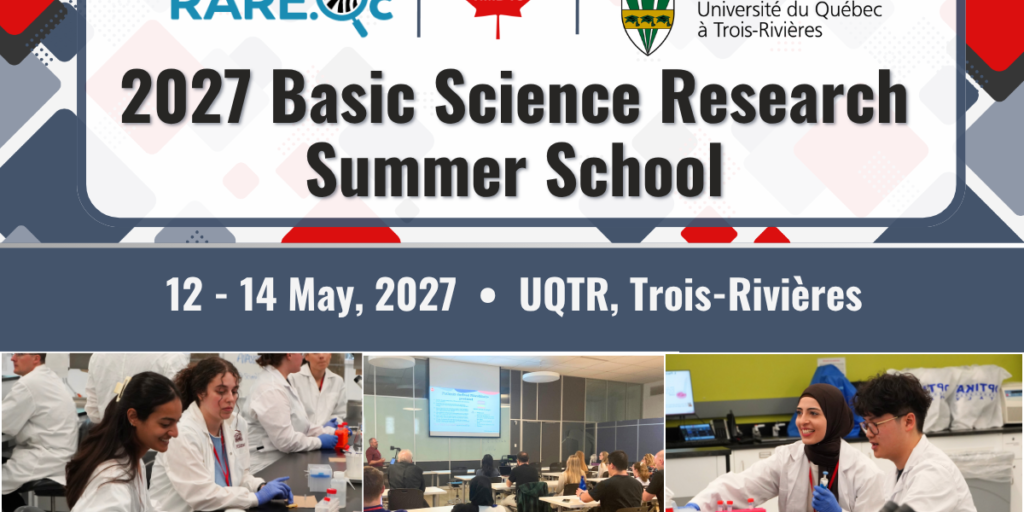
2027 NMD4C–RARE.Qc Basic Science Research Summer School Applications Are Now Open!
Deadline: December 1, 2026
2027 NMD4C–RARE.Qc Basic Science Research Summer School Applications Are Now Open!
The summer school offers neuromuscular and rare disease research trainees the opportunity to participate in an intensive three-day training program focused on cutting-edge experimental and translational research techniques.
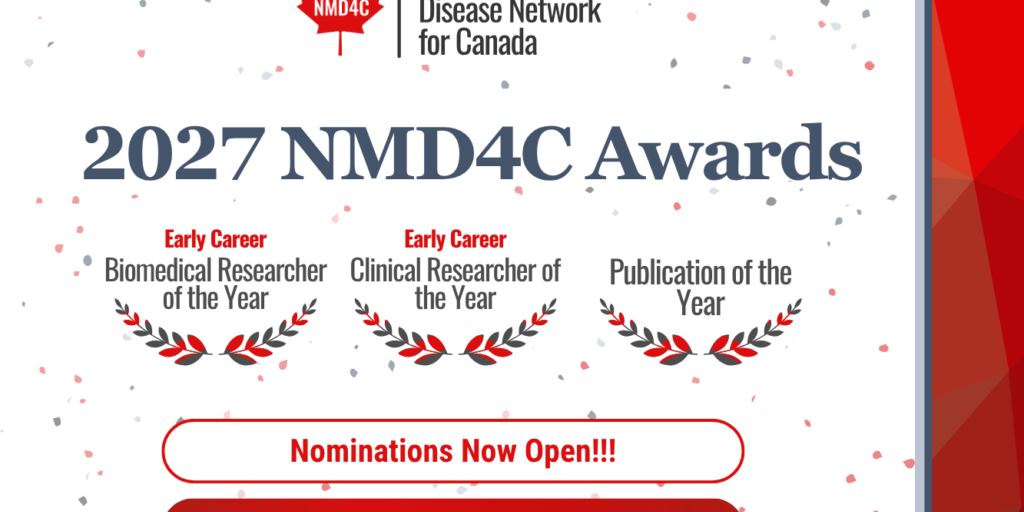
2027 NMD4C Awards Now Open!
Deadline: January 18, 2027 | We are happy to announce our that our 2027 NMD4C Awards are now open!
Save the Date: 2027 NMD4C-RARE.Qc Basic Science Research Summer School
NMD4C and RARE.Qc are pleased to announce the 2027 NMD4C–RARE.Qc Basic Science Research Summer School, will take place May 12-14, 2027, at the Université du Québec à Trois-Rivières (UQTR). The Summer School will bring together graduate students, postdoctoral fellows, and early-career researchers for hands-on training workshops, scientific lectures, trainee presentations, networking opportunities, and engagement with leading experts in neuromuscular and rare disease research.