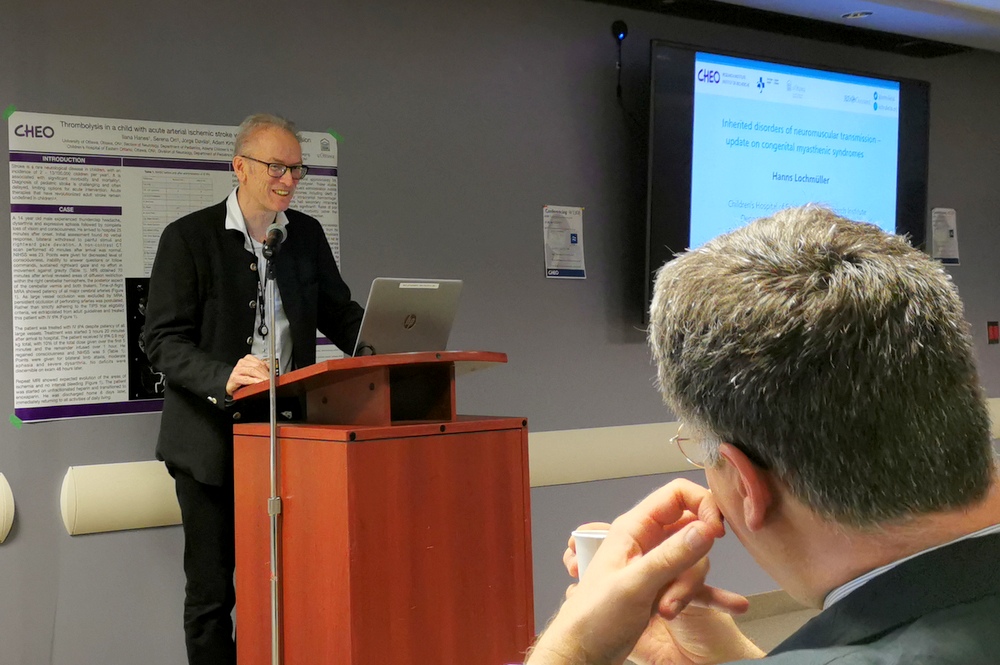
Dr. Hanns Lochmüller Presenting at Can-GARD / CCMG The Leading Strand Webinar Series
Can-GARD/CCMG The Leading Strand Series
NMD4C Lead Investigator Dr. Hanns Lochmüller presenting on Genetic disorders of neuromuscular transmission – congenital myasthenic syndromes
January 29, 2021 12:00pm EST
Register here!
The Leading Strand webinar series is designed for genetics health professionals, led by the Canadian College of Medical Genetics and co-sponsored by Can-GARD. Speakers will be translation-focused researchers, clinicians and innovators. The series will help attendees anticipate, access, and apply new approaches and technologies for patient care.
Genetic disorders of neuromuscular transmission – congenital myasthenic syndromes
Neuromuscular junction disorders are a heterogeneous group of acquired (Myasthenia Gravis, MG) and inherited (Congenital Myasthenic Syndromes, CMS) disorders associated with distinctive clinical, electrophysiological, laboratory and ultrastructural abnormalities. The genetic defects in CMS either impair neuromuscular transmission directly or result in secondary impairments, which eventually compromise the safety margin of neuromuscular transmission. More recently, we have identified two genes (DOK7, GFPT1) that cause fatigable weakness of muscles in a limb-girdle distribution, but rarely affecting facial or eye muscles. Next-generation sequencing and deep phenotyping, in combination with international data sharing, reveals new genetic causes of CMS, but also unusual, overlapping clinical phenotypes which blur the boundaries with primary myopathies and motor neuropathies. This highlights the importance of sharing genomics data for diagnosis and research through a secure platform such as RD-Connect.
Dr. Lochmüller will cover the significant progress made in understanding the molecular pathogenesis of CMS, which is important for both patients and clinicians in terms of reaching a definite diagnosis and selecting the most appropriate treatment.
Read next...
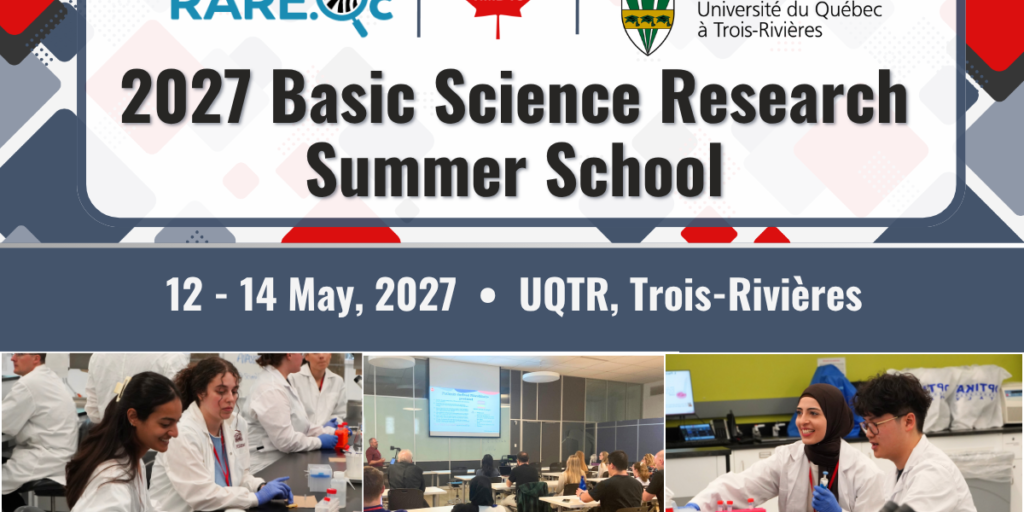
Save the Date: 2027 NMD4C-RARE.Qc Basic Science Research Summer School
NMD4C and RARE.Qc are pleased to announce the 2027 NMD4C–RARE.Qc Basic Science Research Summer School, will take place May 12-14, 2027, at the Université du Québec à Trois-Rivières (UQTR). The Summer School will bring together graduate students, postdoctoral fellows, and early-career researchers for hands-on training workshops, scientific lectures, trainee presentations, networking opportunities, and engagement with leading experts in neuromuscular and rare disease research.
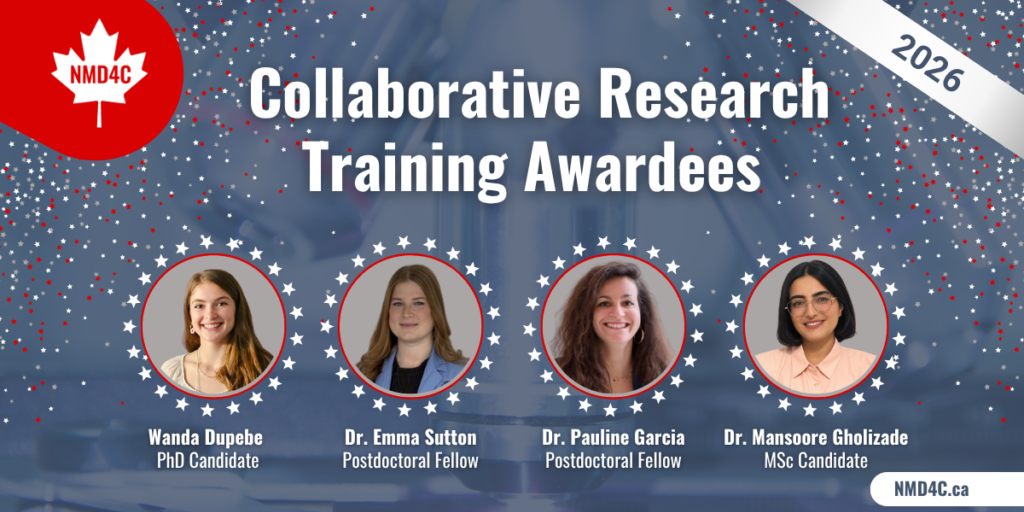
Congratulations to our 2026 Collaborative Research Training Award Recipients!!!
We are excited to announce the recipients of the 2026 NMD4C Collaborative Research Training Awards, which supports Canadian trainees in their efforts to advance neuromuscular disease research while strengthening national collaboration among neuromuscular research laboratories.
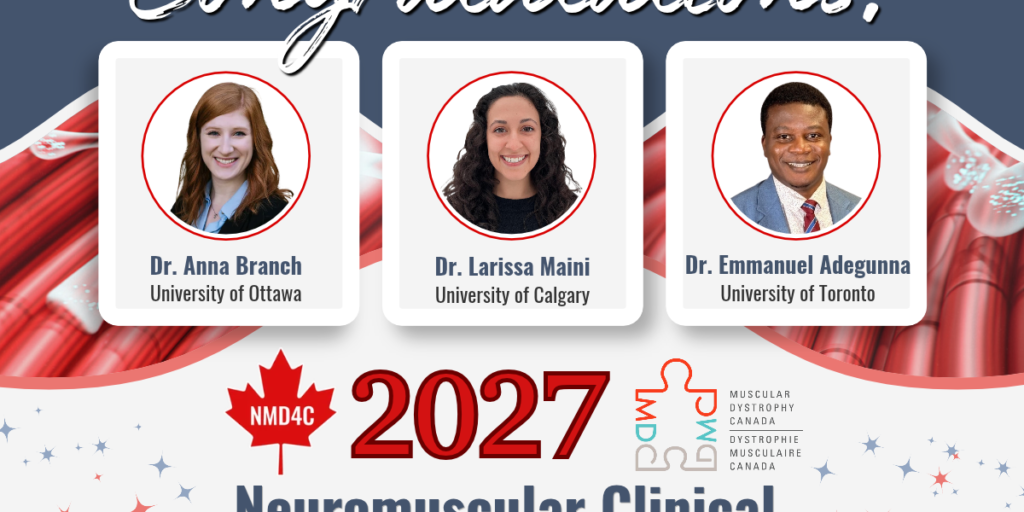
Announcing the 2027 Neuromuscular Clinical Fellowship Funding Recipients!
Together with Muscular Dystrophy Canada, we’re excited to share our 2027 Neuromuscular Clininacal Fellowship Funding Recipients; Dr. Larissa Maini (University of Calgary), Dr. Anna Branch (University of Ottawa) and Dr. Olumide Emmanuel Adegunna (University of Toronto)! This year’s competition provided one-year salary support ($80,000) for our early-career clinicians to participate in Canadian neuromuscular medicine and electromyography (EMG) fellowship training programs.