National strategy for drugs for rare disease update
$1.5 billion in funding over three years announced to help increase access to, and affordability of, effective drugs for rare diseases.
The NMD4C are pleased to share that in March Health Canada announced a new funding plan to support the first-ever national strategy for drugs for rare disease, with an investment of $1.5 billion over three years. This national strategy will increase access to, and affordability of, effective drugs for rare diseases to improve the health of patients across Canada.
Background consultation
The national strategy for drugs for rare disease is the result of an extensive consultation with the rare disease community by Health Canada, the outcomes of which were published in the ‘What We Heard’ report in July 2021. This engagement saw more than 650 individuals and organizations in the rare disease community including patients with lived experience, family members, and caregivers, share their views and ideas towards a national drugs for rare diseases strategy. NMD4C together with Muscular Dystrophy Canada and Defeat Duchenne Canada (formerly Jesse’s Journey) submitted a letter in response to this consultation.
National Strategy for Drugs for Rare Diseases
The recently announced national strategy will work to directly improve access to new and emerging drugs, enhance access to existing drugs, and support early diagnosis and screening for rare diseases. The strategy includes various initiatives to help improve consistent access to drugs for rare diseases across the country, including: cost-sharing of new and emerging drugs, improved evidence collection to support decision-making, enhanced diagnostic tools, funding for Indigenous Services Canada’s Non-Insured Health Benefits Program, and the establishment of a Canadian rare disease clinical trials network.
As a network serving the neuromuscular disease community in Canada, many of our activities align with the new national strategy, particularly our work to strengthen the Canadian neuromuscular clinical trial capacity and provide access to innovative therapies and treatments for all Canadians. We are grateful to support and advocate for the Canadian neuromuscular disease community towards raising the standard of care for neuromuscular diseases and access to therapies across Canada, and look forward to the implementation of these initiatives from Health Canada as a part of a broader national strategy.
Links
- Official National strategy for drugs for rare disease news release from Health Canada
- Press release from Muscular Dystrophy Canada in response to Health Canada’s announcement.
- Press release from Defeat Duchenne Canada in response to Health Canada’s announcement.
- Press release from Canadian Organization for Rare Disorders (CORD) in response to Health Canada’s announcement.
- Results from the Health Canada consultation with the rare disease community to inform this strategy.
Read next...
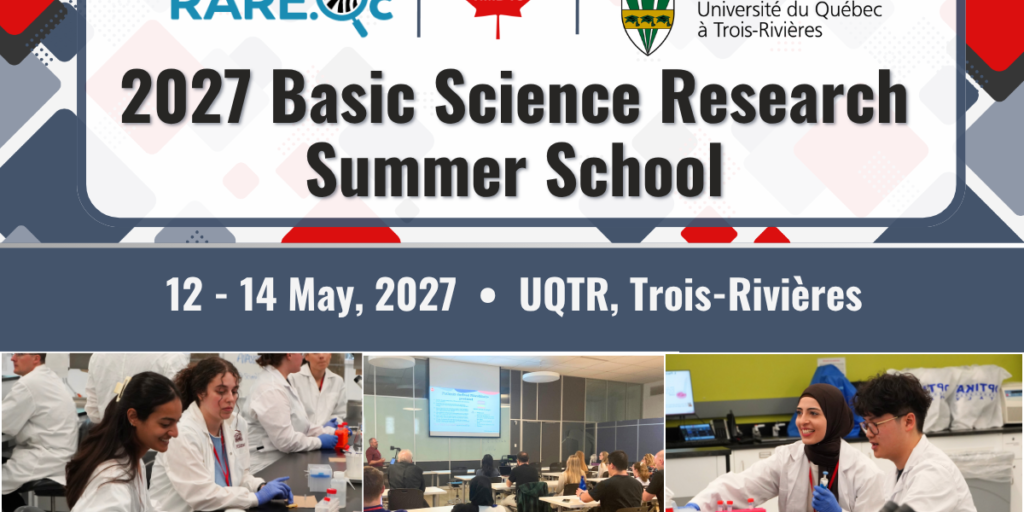
2027 NMD4C–RARE.Qc Basic Science Research Summer School Applications Are Now Open!
Deadline: December 1, 2026
2027 NMD4C–RARE.Qc Basic Science Research Summer School Applications Are Now Open!
The summer school offers neuromuscular and rare disease research trainees the opportunity to participate in an intensive three-day training program focused on cutting-edge experimental and translational research techniques.