October 2024 Updates from the Canadian Neuromuscular Disease Registry
The Canadian Neuromuscular Disease Registry (CNDR) is pleased to share updates on several exciting initiatives this fall!
New Dataset in Facioscapulohumeral Muscular Dystrophy (FSHD): CNDR is preparing to imminently launch its basic dataset for FSHD.
- This dataset was developed in collaboration with MDC, who contributed efforts in obtaining feedback from patients and clinicians.
- Formation of the CNDR FSHD Working Group is in progress, which will be led by Dr. Charles Kassardijan.
- Ethics has been approved at CNDR’s National Office and they will be distributing the FSHD dataset to CNDR-affiliated sites for local ethics approvals this fall.
- CNDR has applied for a Platform Support Grant through Brain Canada with matched co-funding from the FSHD Canada Foundation. If the successful, this will fund 3 years of FSHD data collection at CNDR sites.
- Timely launch of the FSHD dataset aims to ensure preparedness for any post-marketing opportunities that may arise in the future by allowing patients with FSHD to register and have their baseline characteristics in CNDR. View Previous Year’s Update
CIHR Burden of Disease grant
Preparatory work and REB approvals are in progress for work planned under a CIHR grant led by NMD4C investigator Dr. Reshma Amin, aimed at linking registry data with provincial databases, incorporating patient-reported outcomes, and launching two new disease datasets. The project will also involve the launch of two new disease datasets, namely OPMD and SBMA.
Oculopharyngeal Muscular Dystrophy (OPMD):
- The OPMD dataset is pending finalization and REB approval and will be launched as part of this CIHR grant initiative. The OPMD module will be led by Dr. Cynthia Gagnon.
Spinal Bulbar Muscular Atrophy (SBMA):
- The SBMA dataset will be implemented as part of this CIHR grant initiative. The dataset and protocol have been developed led by Dr. Kerri Schellenberg and Dr. Gerry Pfeffer, who have engaged with Indigenous Community Guiding Circles to develop specific procedures for consenting and handling of patient data from Indigenous communities. Input from these conversations will be invaluable in development of CNDR policy to support considerations for EDI and Indigenous sovereignty in collection and analysis of patient data in CNDR.
CNDR PROMs Data Collection:
- In conjunction with this CIHR grant initiative, plans are underway to amend CNDR ethics to incorporate the collection of Patient Reported Outcome Measures (PROMs) directly from patients for future studies, to be piloted over the next few years.
Read next...
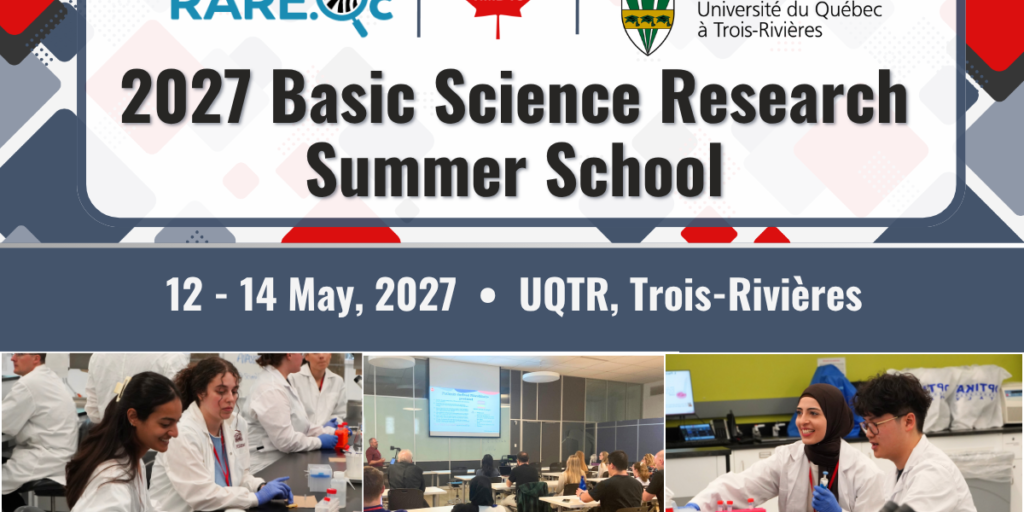
2027 NMD4C–RARE.Qc Basic Science Research Summer School Applications Are Now Open!
Deadline: December 1, 2026
2027 NMD4C–RARE.Qc Basic Science Research Summer School Applications Are Now Open!
The summer school offers neuromuscular and rare disease research trainees the opportunity to participate in an intensive three-day training program focused on cutting-edge experimental and translational research techniques.
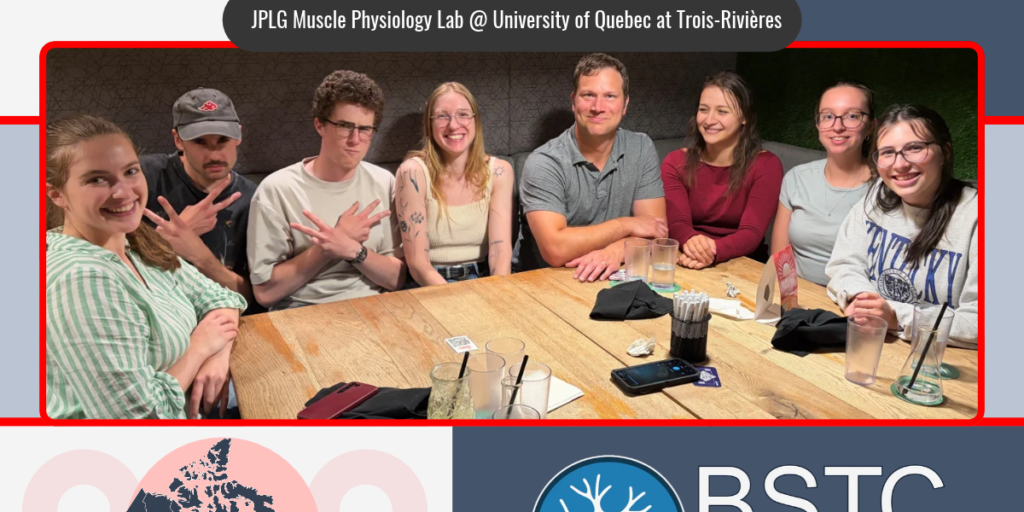
BSTC: Lab of the Month – Dr. Jean-Philippe Leduc-Gaudet’s Muscle Physiology Lab at UQTR
Our new Lab of the Month series highlights members of the NMD4C community and the diverse research, expertise and collaborations taking place across our network. Each month, we’ll introduce a different lab, meet the people behind the research and learn more about the work they are advancing. Kicking off the series, we’re featuring the lab…