Alexa Derksen
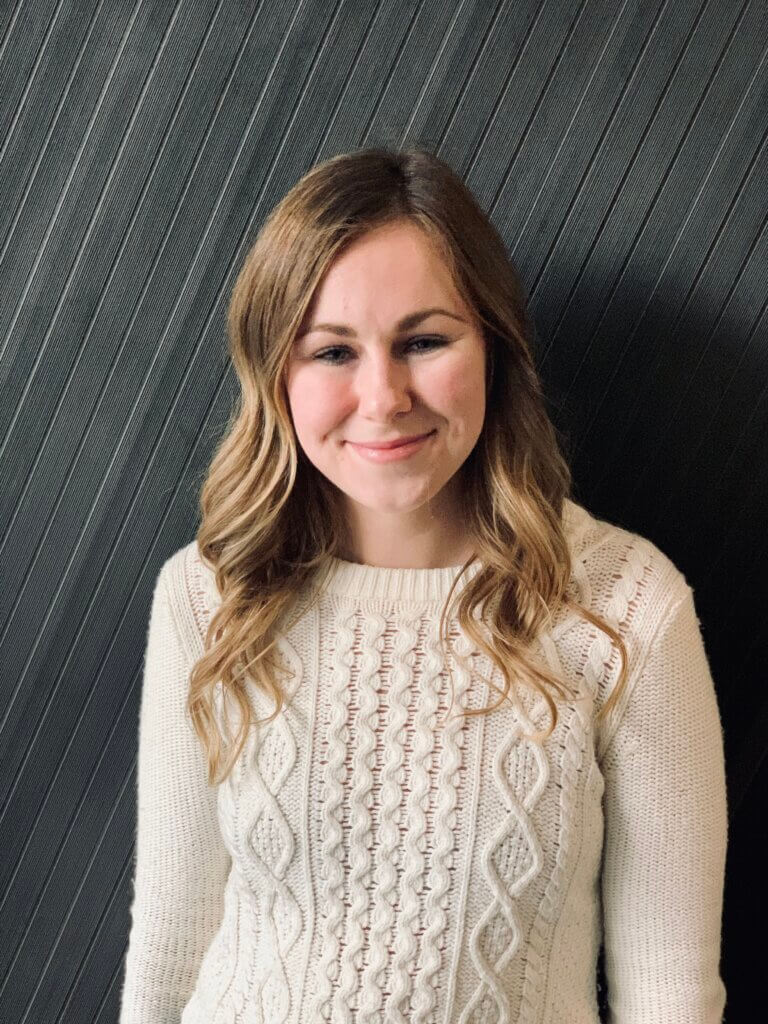
MD/PhD Student | Department of Cellular and Molecular Medicine, University of Ottawa
CHEO Research Institute, Ottawa, Ontario, Canada.
NMD4C Involvement: 3rd Place, Signals That Move Us: Image Competition Winner (2026)
Email AlexaBiography
Alexa is an MD/PhD student at the University of Ottawa, currently completing the PhD portion of her degree in the laboratory of Dr. Hanns Lochmüller, where she studies GNE myopathy. She completed her undergraduate studies in Biology at Carleton University, conducting an honours thesis investigating Parkinson’s disease in a mouse model. Following graduation, she moved to Montréal to pursue a Master’s in Neuroscience at McGill University, where she studied the genetic causes of rare pediatric neurodevelopmental and neurodegenerative disorders.
In 2026, her neuromuscular image won 3rd place in our inaugural image competition, Signals That Move Us.
Recent Publications
Holland, SH, Carmona-Martinez, R, Hentschel, A, Derksen, A, O'Connor, K, O'Neil, D et al.. Hexosamine Pathway Disruption by GFPT1 Loss Drives Coordinated Defects in Glycosylation, Autophagy, and Trafficking. Biomolecules. 2026.16 (7) PMID:42509760
Manis, C, Pertusati, F, Morewood, J, Roos, A, Kleefeld, F, Onali, M et al.. Bis(monoacylglycero)phosphate (BMP) as a circulating biomarker of lysosomal dysfunction in GNE myopathy. Clin Chim Acta. 2027.593 121244 PMID:42501775
Michell-Robinson, MA, Perrier, S, Gauthier, S, Derksen, A, Sabbagh, Q, Girbig, M et al.. Comprehensive genotype-phenotype analysis in POLR3-related disorders. HGG Adv. 2025.6 (4)100481 PMID:40684265
Derksen, A, Thompson, R, Shaikh, M, Spendiff, S, Perkins, TJ, Lochmüller, H et al.. Estimating the Prevalence of GNE Myopathy Using Population Genetic Databases. Hum Mutat. 2024.2024 7377504 PMID:40225917
Manis, C, Casula, M, Roos, A, Hentschel, A, Vorgerd, M, Pogoryelova, O et al.. Ion Mobility QTOF-MS Untargeted Lipidomics of Human Serum Reveals a Metabolic Fingerprint for GNE Myopathy. Molecules. 2024.29 (21) PMID:39519852
See more on PubMed