Job Opportunity: Help Build the Neuromuscular Biobanking Framework in Canada
The NMD4C is excited to share a job opportunity for a Research Software Developer at McGill University! This is an opportunity for a developer to join our biobanking working group lead Dr. Jason Karamchandani and his team at the C-BIG repository to work on neuromuscular biobanking projects including the NMD4C’s virtual biobanking catalogue.
Position Summary:
The goal for this position is to develop software to aggregate and harmonize disparate data collection from sites across Canada who are collaborating with the MNI. This role will also involve tailoring the internal processing and storage of a digital consent process for participants willing to share data and materials for research purposes. This will involve working with several units at the Montreal Neurological Institute, including the core neuroinformatic group, the clinical research unit, the Tannenbaum Open Science Institute team including the Open Science Biorepository Team (C-BIG) and specific units all involved in patient recruitment. The deliverables will be the synthesis of data from multiple site collections and the development of key technical functionalities for the optimization of patient recruitment. Most of this work will include development and maintenance of web-based technologies, as well as documentation and testing of various tools and software.
Primary Responsibilities:
Create tools to aggregate meta-data from several bio-repositories across the country. Create a complete user experience that adapts existing workflows around proper ethical standards, technical requirements, and e-learning functionalities in a way that helps with the recruitment of subjects for research purposes. Execute unit integration and acceptance testing. Deploy, secure, maintain and ensure continual monitoring of platform services for the scientific community. Contribute to the development of a web-based tool used for the recruitment of patients (Javascript is important, PHP is an asset). Develop interoperability to existing database systems. Test and debug various software applications. Participate in team code reviews. Revise and update technical documentation that relates to the existing workflows of the various units and departments involved. Maintain and monitor various systems and applications used as part of this initiative. Design specific interfaces that mould to the user experience. Discuss and interface with a variety of researchers and developers within a team environment towards the goal of patient recruitment. Participate in design meetings.
- Read more about the opportunity here.
- Apply here!
Read next...
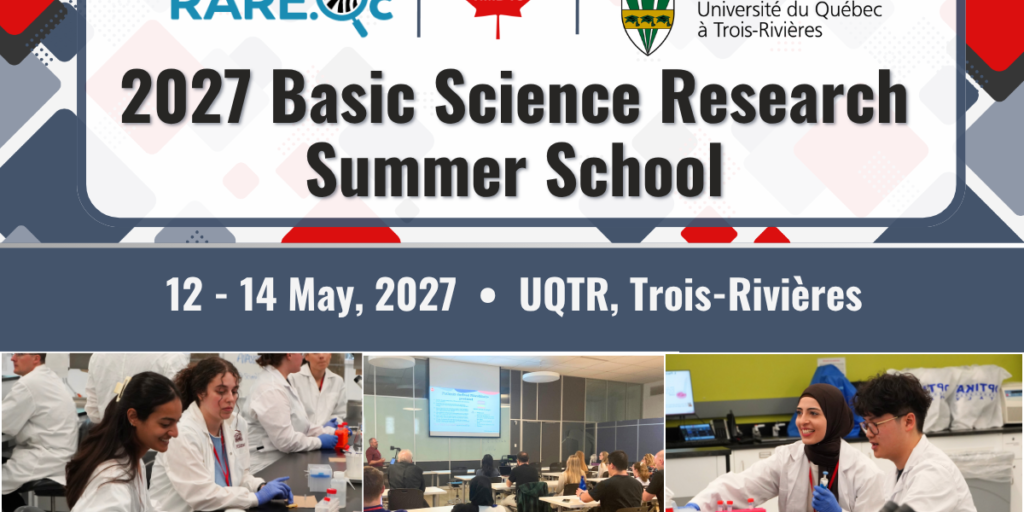
2027 NMD4C–RARE.Qc Basic Science Research Summer School Applications Are Now Open!
Deadline: December 1, 2026
2027 NMD4C–RARE.Qc Basic Science Research Summer School Applications Are Now Open!
The summer school offers neuromuscular and rare disease research trainees the opportunity to participate in an intensive three-day training program focused on cutting-edge experimental and translational research techniques.
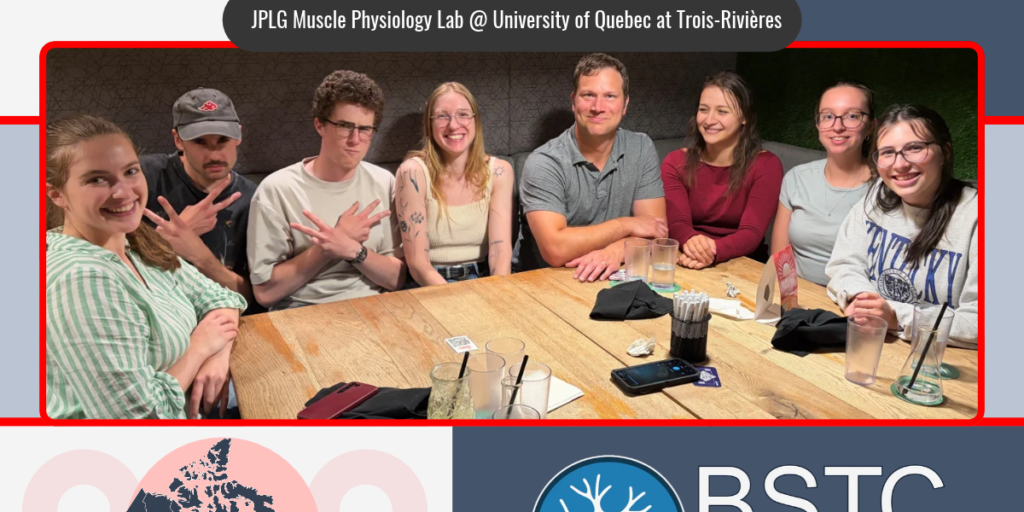
BSTC: Lab of the Month – Dr. Jean-Philippe Leduc-Gaudet’s Muscle Physiology Lab at UQTR
Our new Lab of the Month series highlights members of the NMD4C community and the diverse research, expertise and collaborations taking place across our network. Each month, we’ll introduce a different lab, meet the people behind the research and learn more about the work they are advancing. Kicking off the series, we’re featuring the lab…