Myotonic Dystrophy: EPIC Functions at The Ottawa Hospital

In 2019, the Ottawa Hospital (TOH) introduced a new Electronic Health Record system called EPIC, to move documentation such as orders for blood work, prescriptions, notes and letters from paper-based to online digital formats. This involved a major investment in education and training of hospital staff.
A recent initiative highlights how EPIC functions can be tailored to improve the safety of patients with a rare muscle condition called myotonic dystrophy (DM). DM is a genetic condition that leads to muscle weakness and wasting, and to additional health issues such as cardiac arrhythmia, cataracts of the eyes, diabetes, constipation, and disrupted sleep. DM patients also respond with severe side effects to a range of medications and anaesthetics.
At the Neuromuscular Centre at TOH there are more than 50 patients with DM under the care of neuromuscular specialists, who aware of the specific risks and health issues associated with DM. However, DM patients frequently need to seek medical attention at other TOH departments, whose staff may not be aware of the DM diagnosis or the specific risks associated with prescriptions.
Inspired by a DM family from Ottawa, the TOH medical information team has designed a new EPIC functionality, so-called Best Practice Advisories (BPA), to keep DM patients safe throughout the hospital. Firstly, a side panel alert informs doctors and nurses accessing the patient’s records about the DM diagnosis and provides guidance through a specific “standards of care” document that has been devised by international experts together with the Myotonic Dystrophy Foundation. Secondly, a specific warning will be displayed if the doctor attempts to order a medication that is considered potentially unsafe for DM; to proceed with the order, they are required to acknowledge the warning and explain their reasons.
The new BPAs went live in June 2021. If successful, they may be adopted by other hospitals and organisations in Canada to keep DM patients safe.
The Neuromuscular Disease Network for Canada (NMD4C) is a network of clinicians, scientists, patients and patient advocacy groups, committed to improving the care, research, and treatment of neuromuscular diseases for all Canadians. The network is encouraged to see projects such as this that engage multiple stakeholders, identifying and addressing issues from different perspectives and fostering collaborations that deliver impactful outcomes.
For further information please contact:
James Davis, NMD4C Communications Coordinator
Read next...
Save the Date: 2027 NMD4C-RARE.Qc Basic Science Research Summer School
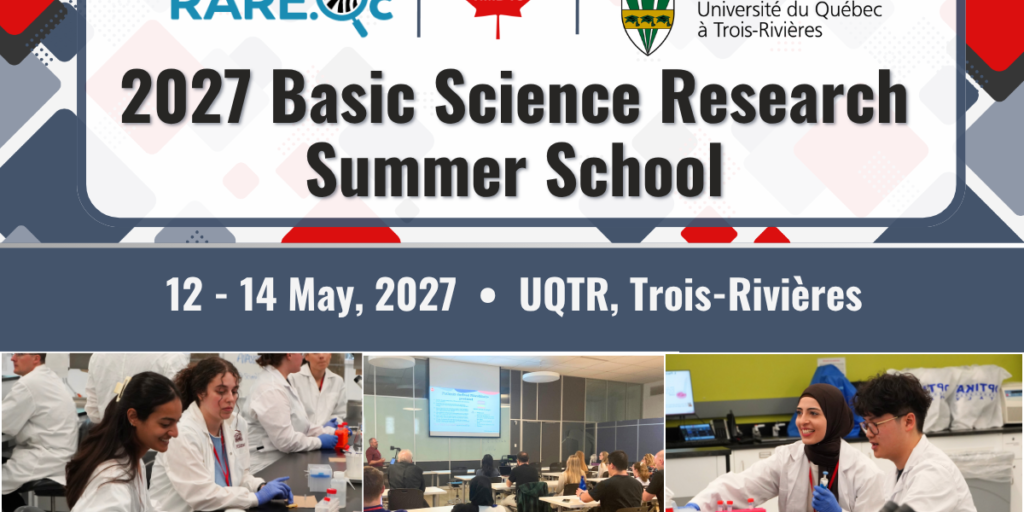
NMD4C and RARE.Qc are pleased to announce the 2027 NMD4C–RARE.Qc Basic Science Research Summer School, will take place May 12-14, 2027, at the Université du Québec à Trois-Rivières (UQTR). The Summer School will bring together graduate students, postdoctoral fellows, and early-career researchers for hands-on training workshops, scientific lectures, trainee presentations, networking opportunities, and engagement with leading experts in neuromuscular and rare disease research.
Congratulations to our 2026 Collaborative Research Training Award Recipients!!!
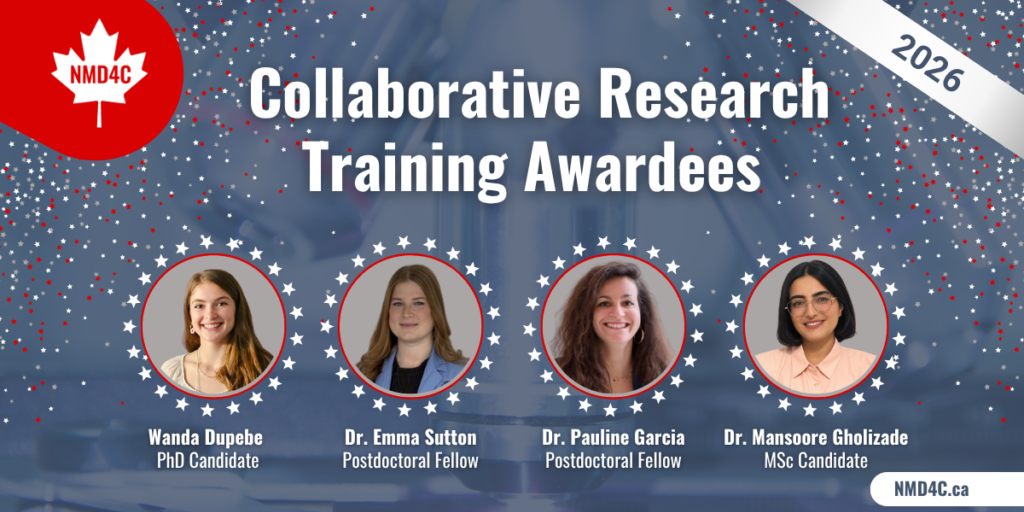
We are excited to announce the recipients of the 2026 NMD4C Collaborative Research Training Awards, which supports Canadian trainees in their efforts to advance neuromuscular disease research while strengthening national collaboration among neuromuscular research laboratories.
Announcing the 2027 Neuromuscular Clinical Fellowship Funding Recipients!
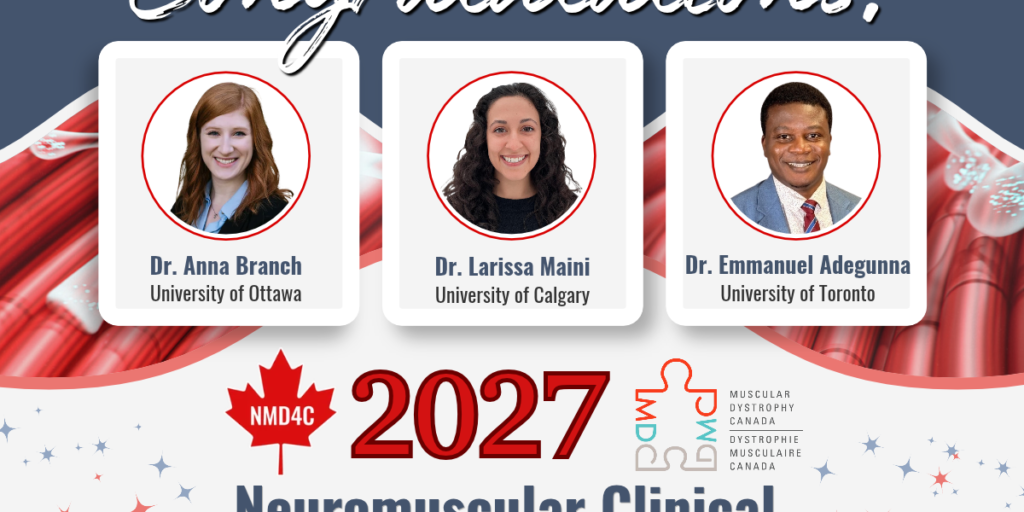
Together with Muscular Dystrophy Canada, we’re excited to share our 2027 Neuromuscular Clininacal Fellowship Funding Recipients; Dr. Larissa Maini (University of Calgary), Dr. Anna Branch (University of Ottawa) and Dr. Olumide Emmanuel Adegunna (University of Toronto)! This year’s competition provided one-year salary support ($80,000) for our early-career clinicians to participate in Canadian neuromuscular medicine and electromyography (EMG) fellowship training programs.