NMD4C Launch Canadian Neuromuscular Clinical Trial Network
The Neuromuscular Disease Network for Canada is thrilled to announce the launch of a Canadian neuromuscular clinical trial network (CTN) as a part of our clinical research work. Led by investigators Dr. Craig Campbell, Dr. Jean Mah, and Dr. Kerri Schellenberg, the CTN will work towards increasing the number of neuromuscular clinical trials conducted in Canada, enhancing Canadian neuromuscular trial capacity, and supporting a cohesive network of clinician researchers and their teams.
Increasing the number of neuromuscular clinical trials conducted in Canada
The CTN will facilitate connections between industry and clinical sites to support the activation of new clinical trials or the opening of new clinical trial sites. We will deliver information about upcoming neuromuscular trial opportunities and offer information on existing trials available and implement strategic promotion to increase international visibility of the benefits of conducting neuromuscular clinical trials in Canada.
Enhancing trial capacity
The CTN will offer education and training programs to clinicians and their teams to improve clinical trial execution, connect with existing patient organizations to increase opportunities for patients to participate in neuromuscular clinical trials, and gather patient feedback from patient organizations and clinical sites to advance the development of patient-centric clinical trials.
Supporting a network of clinician researchers and their teams
The CTN will facilitate peer-to-peer mentorship opportunities among trialists specializing in neuromuscular clinical trials, coordinate a pan-Canadian hub for trialists and their teams to discuss clinical trial experiences, and launch a Canada-wide community of practice program for clinical trial coordinators overseeing neuromuscular clinical trials.
The CTN leadership group will be supported by Maria Masnata, our new clinical trials and community of practice manager. Learn more about the CTN mission and objectives, or contact Maria Masnata for more information!
Read next...
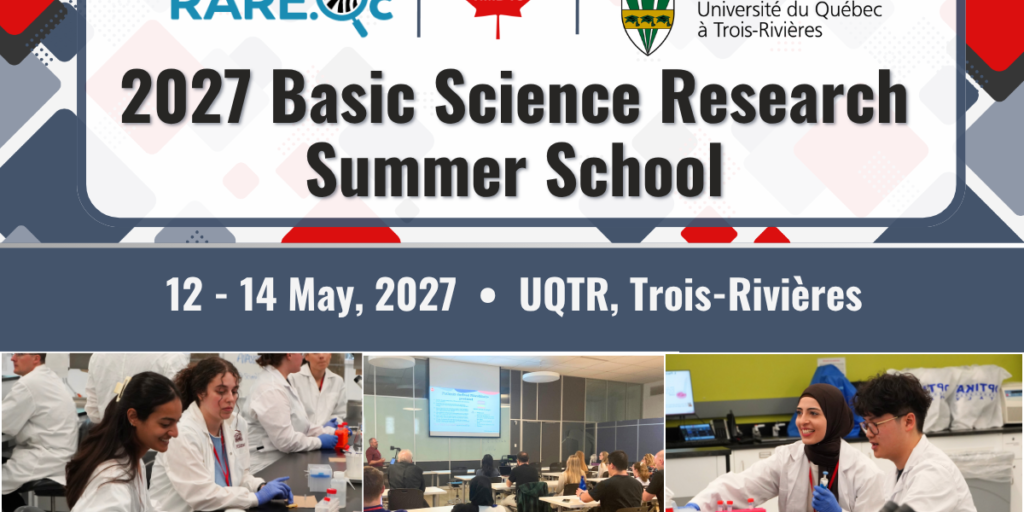
2027 NMD4C–RARE.Qc Basic Science Research Summer School Applications Are Now Open!
Deadline: December 1, 2026
2027 NMD4C–RARE.Qc Basic Science Research Summer School Applications Are Now Open!
The summer school offers neuromuscular and rare disease research trainees the opportunity to participate in an intensive three-day training program focused on cutting-edge experimental and translational research techniques.