NMD4C Hosts Inaugural Clinical Summer School to Empower Canada’s Future Neuromuscular Leaders
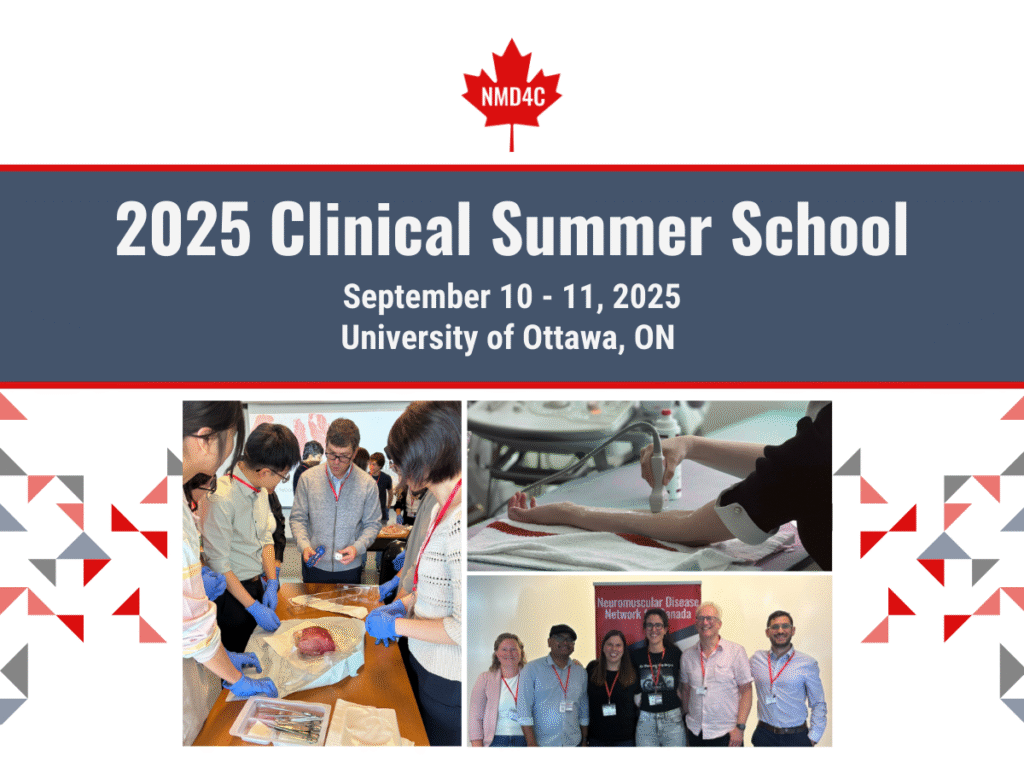
On September 10–11, 2025, NMD4C proudly hosted its first Clinical Summer School in Ottawa, ON, welcoming 19 neuromuscular clinical fellows from institutions across the country. Co-chaired by Dr. Gordon Jewitt and Dr. Marianne Nury, the event marked a significant milestone in national efforts to foster excellence in neuromuscular care and education.
The immersive two-day program featured interactive, hands-on workshops led by Canadian experts, including Drs. Alberto Aleman, Grayson Beecher, Ari Breiner, Leslie Hamilton, Hanns Lochmüller, Hugh McMillan, Gerd Melkus, Kiran Polavarapu, Zaeem Siddiqi, and Jodi Warman Chardon. These sessions were designed to complement NMD4C’s Royal College–accredited National Neuromuscular Lecture Series, offering fellows a unique opportunity to refine diagnostic and analytical skills in a collaborative setting.
In addition to clinical training, the Summer School emphasized mentorship and peer connection. A dedicated networking session on Day 1 allowed fellows to build relationships and share experiences, reinforcing the network’s commitment to community-building among early-career researchers.
A highlight of the event was the peer election of Dr. Joaquín Machado and Dr. Bridget Mulvany-Robbins as Co-Chief Neuromuscular Fellows. We also extend our thanks to Dr. Zahra Aleisa for her outstanding service and leadership as our 2024/2025 Chief Neuromuscular Fellow. Her commitment has been instrumental in shaping a supportive and enriching environment for fellows across the network.
To ensure accessibility, NMD4C waived registration fees and provided travel and accommodation support, enabling participation from across Canada. We would like to extend our thanks to our sponsors FUJIFILM Sonosite and CANON Medical, as well as all speakers, fellows, and partners whose contributions made the event a resounding success.
By investing in the next generation of neuromuscular specialists, NMD4C continues to advance its mission of collaborative research, clinical excellence, and national capacity-building in neuromuscular medicine.
Relive the highlights from this event
Read next...
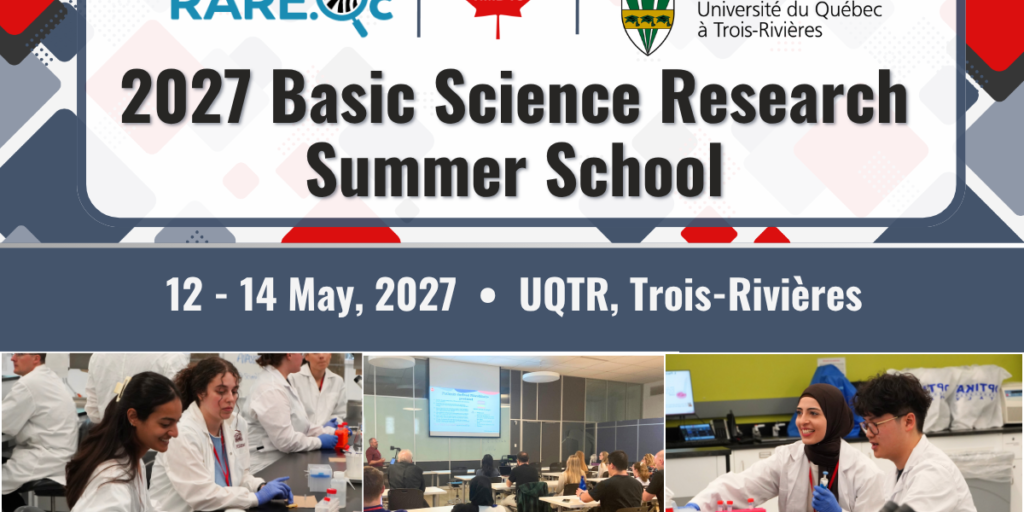
2027 NMD4C–RARE.Qc Basic Science Research Summer School Applications Are Now Open!
Deadline: December 1, 2026
2027 NMD4C–RARE.Qc Basic Science Research Summer School Applications Are Now Open!
The summer school offers neuromuscular and rare disease research trainees the opportunity to participate in an intensive three-day training program focused on cutting-edge experimental and translational research techniques.