MICYRN Secures $20 Million Grant from CIHR for a Pediatric Rare Disease Clinical Trials and Treatment Network
The NMD4C are excited to share MICYRN‘s success in securing a $20 million grant from CIHR Institute of Genetics to support the development and execution of RareKids-CAN: Pediatric Rare Disease Clinical Trials and Treatment Network. Under the leadership of MICYRN’s Scientific Director, and Nominated Principal Applicant, Dr. Thierry Lacaze-Masmonteil, RareKids-CAN is a transformative initiative set to revolutionize the landscape of rare disease research and treatment for children and their families in Canada and beyond.
At the core of RareKids-CAN, is a coalition of diverse national and international experts including patient/family partners and patient organizations pooling their collective knowledge and experience in the pediatric rare disease community. Leveraging the strengths of MICYRN and its 17 maternal/child health research institutions, aimed at streamlining complex, pediatric, multi-center, multi-jurisdictional clinical trials, RareKids-CAN is primed for swift and effective operationalization.
RareKids-CAN aims to establish a robust platform in Canada to support pediatric rare disease clinical trials, providing essential infrastructure and resources. It seeks to enhance capacity through comprehensive training and mentorship opportunities, attract international trials and investments, foster inclusivity, and improve accessibility. The network prioritizes data collection and analysis to inform decision-making, while also supporting increased submissions for Health Canada authorization, ensuring timely access to innovative therapies for those impacted by rare diseases.
NMD4C Investigators involved with RareKids-CAN network grant
The NMD4C is excited to support this initative – we were pleased to share a letter of support for the grant application, and celebrate the many NMD4C investigators who are a part of the RareKids-CAN network:
- Dr. Leanne Ward (Executive Committee Member)
- Dr. Alexandra King (Executive Committee Member)
- Dr. Craig Campbell (Executive Committee Member)
- Dr. Maryam Oskoui (Principal Applicant, Co-Lead of Health Economics, HTA and Reimbursement Sub-Platform)
- Dr. Malcolm King (Co-Applicant, Working group member)
- Dr. Homira Osman (Co-Applicant, Working group member)
- Dr. Hanns Lochmüller (Co-Applicant)
- Dr. James Dowling (Co-Applicant)
- Stacey Lintern (Collaborator, Working group member)
For more information, please visit MICYRN’s website.
Read next...
NMD4C Hosts 3rd Annual Basic Research Summer School at uOttawa!
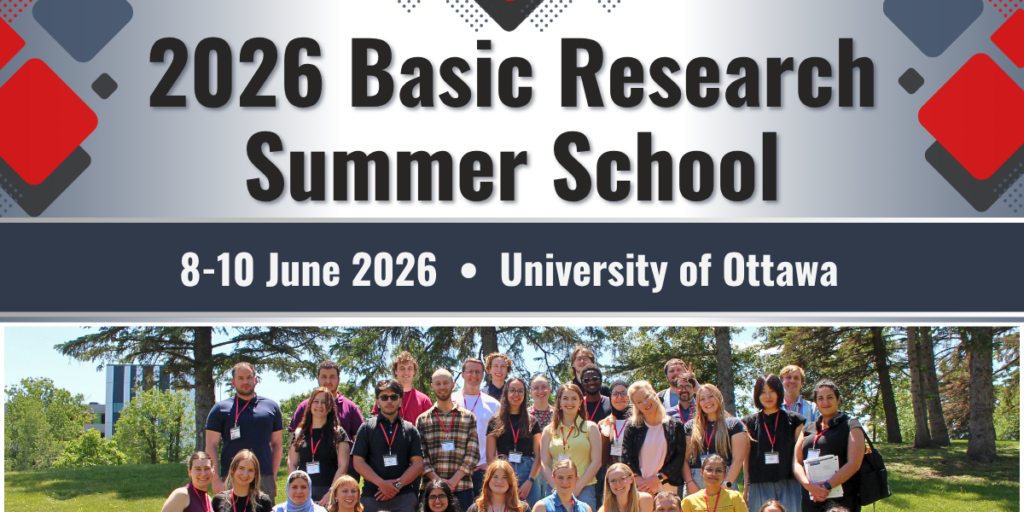
From June 8 to 10, 2026, we hosted the 3rd annual NMD4C Basic Research Summer School at the University of Ottawa. The program supported 28 neuromuscular research trainees (graduate students and postdoctoral fellows) from across Canada and focused on developing practical skills, strengthening core knowledge in neuromuscular research, and providing opportunities to present and discuss their work. Through a combination of tutorials, lectures, hands-on workshops in cutting-edge wet lab techniques, flash talks, and both structured and informal networking, participants engaged with faculty, exchanged ideas, and built connections across institutions and career stages.
New Publication from the NMD4C Clinical Trial Network Strengthens Trial Capacity in Canada
We are pleased to share a new publication from the NMD4C Clinical Trial Network led by Kerri Lynn Schellenberg, Homira Osman, Maria Masnata, Rhiannon Hicks, Corinne Kagan, Ana Stosic, Stacey Lintern, Erin Beattie, Drs. Hanns Lochmüller, Craig Campbell, and Jean K Mah. This work focuses on the implementation of a coordinated Canadian neuromuscular clinical trial network to enhance trial readiness, capacity, and access in rare disease research.
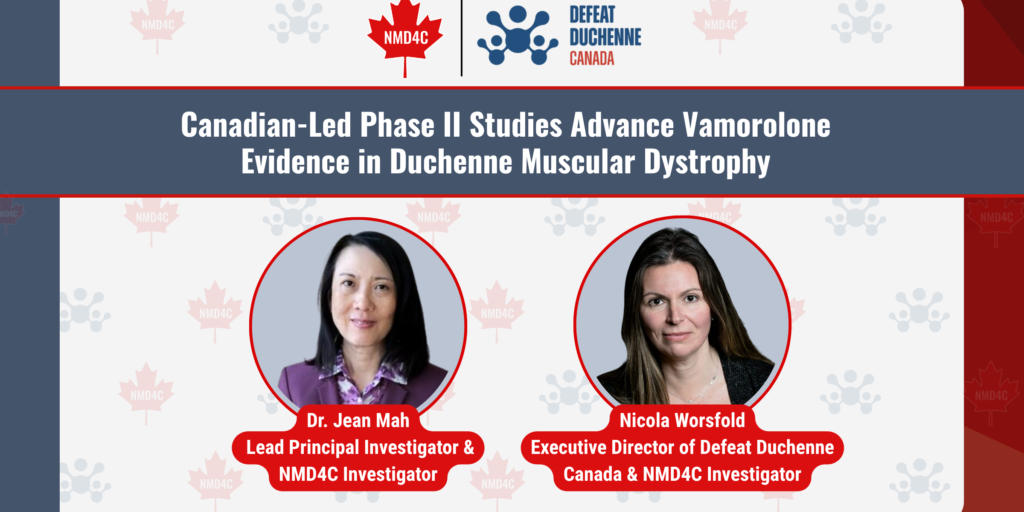
Canadian-Led Phase II Studies Advance Vamorolone Evidence in Duchenne Muscular Dystrophy
NMD4C investigators contributed to two phase II studies evaluating vamorolone in boys with Duchenne muscular dystrophy across early childhood and adolescence, demonstrating safety, favorable pharmacokinetics, and potential efficacy. Led by Dr. Jean Mah and conducted across Canadian clinical trial sites with national and industry collaborators, the findings supported Health Canada approval of vamorolone as the first treatment for DMD in Canada. Leaders from both the clinical and patient advocacy communities, including Defeat Duchenne Canada, highlighted the impact of collaboration among patients, families, clinicians, and researchers in advancing care and improving access to new therapies.